
Bag of Ice vs Gel Pack is a comparison many businesses overlook when choosing cold chain packaging for temperature-sensitive deliveries. While both options are used to keep products cool, they behave very differently once they are placed inside a shipping box. For companies shipping chilled food, meal kits, pharmaceuticals, healthcare products or specialist retail goods, that difference can have a real impact on product quality, customer experience and delivery performance.
When products need to arrive in the right condition, cooling is not simply about making the box cold at the start of the journey. It is about maintaining a controlled temperature profile throughout transit. This becomes especially important during the summer months, when external heat, courier handling and delivery delays can all place added pressure on the packaging system.
At first glance, a bag of ice can seem like a simple solution. It is familiar, widely available and easy to understand. However, cold chain logistics is rarely that straightforward.
A shipping box may leave site in good condition, but it still has to pass through loading, handling, storage, vehicle movement and final-mile delivery before reaching the customer. During that journey, the cooling material inside the box needs to perform consistently.
This is where the Bag of Ice vs Gel Pack discussion becomes important. A bag of ice may provide cooling, but its performance changes as it melts. A gel pack, on the other hand, is designed specifically to support temperature-controlled shipping.
For businesses looking to improve product protection, reduce complaints and create a more dependable delivery experience, the right cooling solution matters.
A bag of ice can cool products, but it also introduces several risks inside a shipping box.
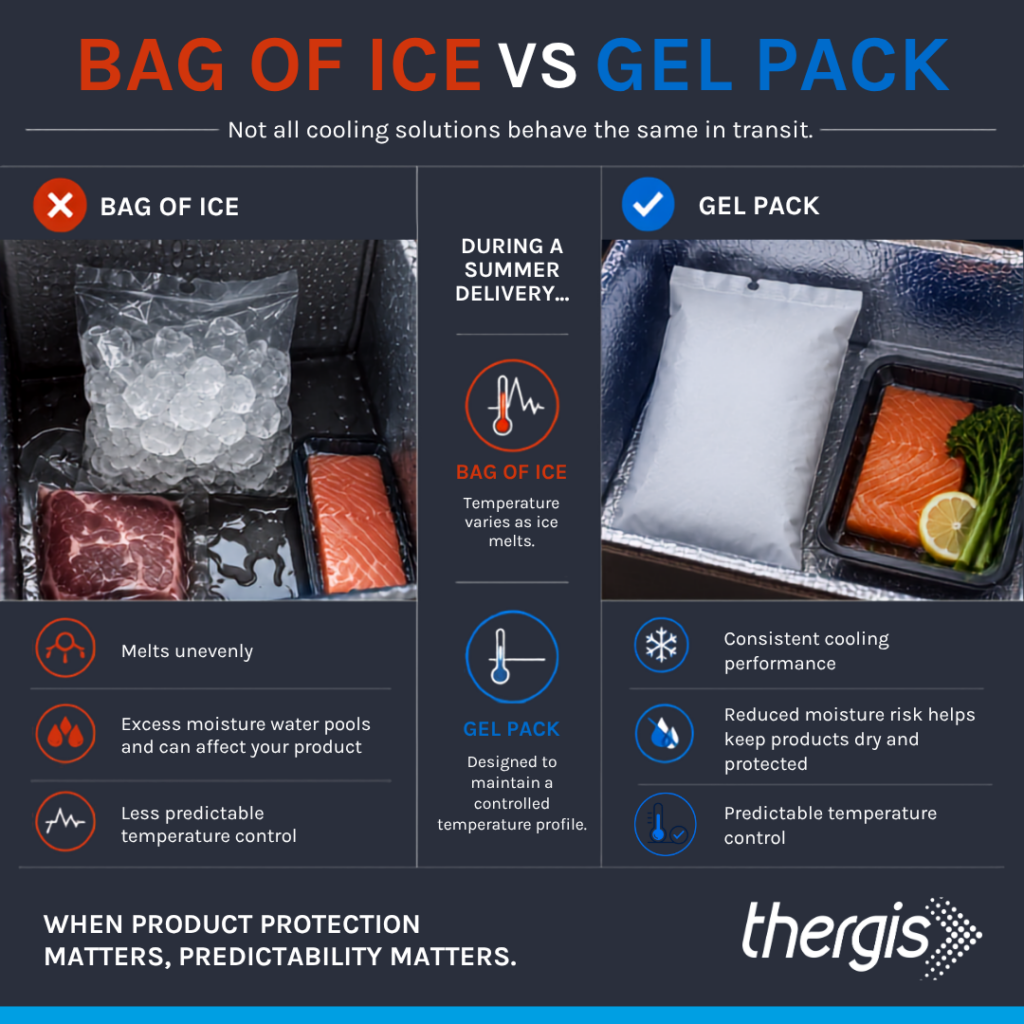
As ice melts, it does not always do so evenly. This can lead to fluctuating temperatures across different areas of the package. Some products may remain cold, while others may be exposed to less stable conditions as the ice turns to water.
Moisture is another major issue.
Once ice begins to melt, water can pool inside the box. This can affect the product, the outer packaging, labels, paperwork and presentation. For food deliveries, this can make the unboxing experience feel poor. For healthcare or pharmaceutical deliveries, excess moisture can create additional handling concerns.
Even when the product itself is sealed, wet packaging can still damage the customer’s perception of quality. Nobody wants to receive a chilled delivery that looks as though it has leaked or been poorly packed.
Gel packs are designed for cold chain packaging applications where control and consistency matter.
Unlike loose ice, gel packs are sealed and contained. This helps reduce the risk of excess water entering the box as the cooling material changes temperature. The product is better protected from moisture, while the pack continues to provide controlled cooling throughout the transit period.
When comparing Bag of Ice vs Gel Pack options, predictability is one of the biggest differences.
Gel packs can support a more controlled temperature profile, making them a more suitable choice for businesses that need dependable performance across repeated deliveries. This is particularly useful for companies sending high-value, perishable or sensitive products where product loss can be costly.
You can learn more about Thergis’ gel pack range and cold chain packaging products if you are reviewing your current setup.
Different sectors have different requirements, but many face the same basic challenge: the product must arrive in the right condition.
For chilled food and meal kits, temperature control affects freshness, shelf life and customer satisfaction. A wet or poorly packed delivery can quickly lead to complaints, even if the product is technically still usable.
For pharmaceutical and healthcare products, cold chain performance can be even more critical. These deliveries often require greater control, clear packaging processes and reliable transit planning. Guidance from organisations such as the Cold Chain Federation and food safety guidance from the Food Standards Agency highlight the importance of maintaining suitable temperature conditions across storage and distribution.
This is why packaging decisions should not be based on convenience alone. The cooling material, insulated packaging, box size, product type and transit time all need to work together.
The best cold chain packaging solution depends on the product, the delivery route and the level of temperature control required.
| Consideration | Why it matters |
|---|---|
| Product type | Chilled food, pharmaceuticals, healthcare products and meal kits all have different temperature requirements. |
| Transit duration | Longer delivery journeys usually require more carefully planned thermal protection. |
| External temperatures | Summer deliveries place more pressure on packaging, especially during handling and final-mile delivery. |
| Moisture sensitivity | Products, labels and packaging can be affected if ice melts and water pools inside the box. |
| Packaging design | Box size, insulation type and coolant quantity all influence temperature performance. |
| Compliance requirements | Some sectors require more controlled, repeatable and documented cold chain processes. |
A gel pack is often the better option when consistency, product protection and presentation matter. It helps reduce the uncertainty that can come with melting ice, especially during warmer months or longer delivery journeys.
Thergis also supplies insulated packaging solutions designed to support temperature-sensitive products in transit.
When comparing Bag of Ice vs Gel Pack solutions, the decision comes down to control.
A bag of ice may provide cooling, but it can melt unevenly, create excess moisture and make temperature performance harder to predict. Gel packs are designed to provide more consistent cooling while helping to keep products dry and protected inside the box.
For businesses shipping chilled food, meal kits, pharmaceuticals, healthcare products or other temperature-sensitive goods, predictability matters. It can help protect the product, reduce waste and create a better experience for the customer receiving the delivery.
At Thergis, we manufacture and supply gel packs and cold chain packaging products for businesses that need reliable temperature control in transit. Whether you are preparing for summer demand, reviewing your current packaging setup or looking for a more dependable cooling solution, our team can help.
Get in touch with the Thergis team to discuss your cold chain packaging requirements.